
Teacher Bibliography
This Teacher Bibliography is designed to supplement the textbooks, materials, and curricula you currently use to teach about the Civil Rights movement. It includes a selected list of primarily free print and web materials. If you have a suggested resource that you think we should include, please contact us at africanamericanart@si.edu.
"Analyzing King's 'I Have a Dream' Speech." PBS LearningMedia. Accessed January 10, 2012.
http://www.pbslearningmedia.org/content/02840793-46c1-4e1b-b8bb-01f85ad0af4b/
Resource Type: Website
This digital resource features a PBS News Hour video about Dr. Martin Luther King Jr.'s "I Have a Dream" speech. It shows historical footage as well as fourth grade students from Watkins Elementary School in Washington, D.C. reciting the speech on the steps of the Lincoln Memorial in 2011. A teacher-created high school lesson plan featuring the "I Have a Dream Speech" as a work of literature is also included.
"The African American Odyssey: A Quest for Full Citizenship." Library of Congress. Accessed February 11, 2011.
http://lcweb2.loc.gov/ammem/aaohtml/exhibit/aointro.html.
Resource Type: Online Exhibition
This online exhibition showcases the rich African American collections of the Library of Congress. The Civil Rights Era section is separated into two parts: Desegregation and Civil Rights in the Arena and on the Stage. Numerous primary documents are highlighted.
Berger, Maurice. "Photography Changes the Struggle for Racial Justice." Click! Photography Changes Everything. Accessed February 11, 2011.
http://click.si.edu/Story.aspx?story=29.
Resource Type: Website
This article by cultural historian and curator Maurice Berger on the Smithsonian Photography Initiative website describes how the power of photographic images was used to shape and then forward the civil rights movement in the 1960s.
"The Birmingham Civil Rights Institute." Accessed February 11, 2011.
http://www.bcri.org/index.html.
Resource Type: Website
The Birmingham Civil Rights Institute (BCRI), which serves as both a museum and an institute, documents the history of African American citizens in Birmingham, Alabama, and their efforts to become full participants in the city's government and business community. The BCRI exists as a "living institution" whose mission is “to promote civil and human rights worldwide through education.” The website provides information on exhibitions and collections, educational resources, and an interactive timeline.
"Citizen King." PBS. Accessed February 11, 2011.
http://www.pbs.org/wgbh/amex/mlk/.
Resource Type: Website and Film
The American Experience documentary Citizen King explores the last five years of Dr. Martin Luther King Jr.'s life. The film incorporates personal recollections and eyewitness accounts of friends, movement associates, journalists, law enforcement officers, and historians. The accompanying website includes a timeline, maps, teacher’s guide, and access to primary sources.
"Civil Rights." Smithsonian Center for Education and Museum Studies. Accessed January 10, 2012.
http://www.smithsoniansource.org/display/topic/viewdetailshis.aspx?TopicId=1032.
Resource Type: Website
This website features lesson plans and document based questions (DBQs) using primary sources that were developed by several groups of teachers who conducted research at the Smithsonian from 2000-2005 as part of Teaching American History grants. Several historical topics are highlighted including Civil Rights. The Civil Rights resources include a middle school DBQ on the impact of Brown v. Board of Education, a high school DBQ on Brown v. Board of Education, an elementary school lesson plan on Rosa Parks, and an elementary school lesson plan on school segregation.
"Education Resources: Teacher Guides." Smithsonian American Art Museum. Accessed February 11, 2011.
http://americanart.si.edu/education/resources/guides/index.cfm.
Resource Type: Teacher’s Guide
The Smithsonian American Art Museum has several teaching modules based on works by African American artists from the museum’s collection. These modules represent a digitized, full-color version of a teaching kit that accompanied a past exhibition. Topics include Education and Equity; Masking Matters; My People, Our People; and Myth and Modern Society. Education and Equity explains the cultural impact of Supreme Court decisions on the African American community. Masking Matters explains the conscious attempt to express ancestral heritage and racial pride through art. My People, Our People explores the diverse experiences of and cultural connections among African Americans and how African Americans influenced and contributed to American culture. Myth and Modern Society explores how myths transcend time and place and how mythology is used as commentary on experience.
"For All the World to See: Visual Culture and the Struggle for Civil Rights." University of Maryland, Baltimore County. Accessed February 10, 2011.
http://www.umbc.edu/cadvc/foralltheworld/index.php.
Resource Type: Online Exhibition
"For All the World to See: Visual Culture and the Struggle for Civil Rights" is an exhibition organized by the Center for Art, Design, and Visual Culture, University of Maryland, Baltimore County in partnership with the Smithsonian National Museum of African American History and Culture. Through a host of media—including photographs, television and film clips, magazines, newspapers, posters, books, and pamphlets—the project explores the historic role of visual culture in shaping, influencing, and transforming the fight for racial equality and justice in the United States from the late 1940s to the mid-1970s. "For All the World to See" includes a traveling and online exhibition, online film festival, and companion book. Educator and learning resources are also available on the website.
"Freedom Riders." PBS. Accessed February 11, 2011.
http://www.pbs.org/wgbh/americanexperience/freedomriders/.
Resource Type: Website and Film
The American Experience documentary Freedom Riders tells the story of six months in 1961 that changed America forever. From May until November 1961, more than four hundred black and white Americans risked their lives—and many endured savage beatings and imprisonment—to simply travel together on buses and trains as they journeyed through the Deep South. Deliberately violating Jim Crow laws, the Freedom Riders met with bitter racism and mob violence along the way, sorely testing their belief in nonviolent activism. The website includes a timeline, interactive map, teacher’s guide, biographies, and interviews with Freedom Riders.
"International Civil Rights Center & Museum." Accessed February 11, 2011.
http://www.sitinmovement.org/home.asp.
Resource Type: Website
The International Civil Rights Center & Museum is an archival center, collecting museum, and teaching facility devoted to the international struggle for civil and human rights. The museum celebrates the nonviolent protests of the 1960 Greensboro sit-ins that served as a catalyst in the Civil Rights movement. The center’s website provides videos, information on exhibitions, and photographs.
"Jacob Lawrence: The Migration Series." The Phillips Collection. Accessed February 11, 2011.
http://www.phillipscollection.org/migration_series/index.cfm.
Resource Type: Online Exhibition
The Phillips Collection in Washington, D.C., holds half of Jacob Lawrence’s Migration Series paintings, which depict the migration of African Americans from the rural south to the industrial north that began during World War I. The other thirty of the original sixty panel paintings are in the collection of the Museum of Modern Art in New York. This online exhibition includes a teaching kit for purchase, worksheets, student artwork inspired by the paintings, and games for kids. A nationwide curricula guide is also available at www.phillipscollection.org/press/press_docs/press_kits/ArtsIntegrationDCPS.pdf
"A Journey Through Art with W. H. Johnson." Smithsonian American Art Museum. Accessed February 11, 2011.
http://americanart.si.edu/education/johnson/.
Resource Type: Website
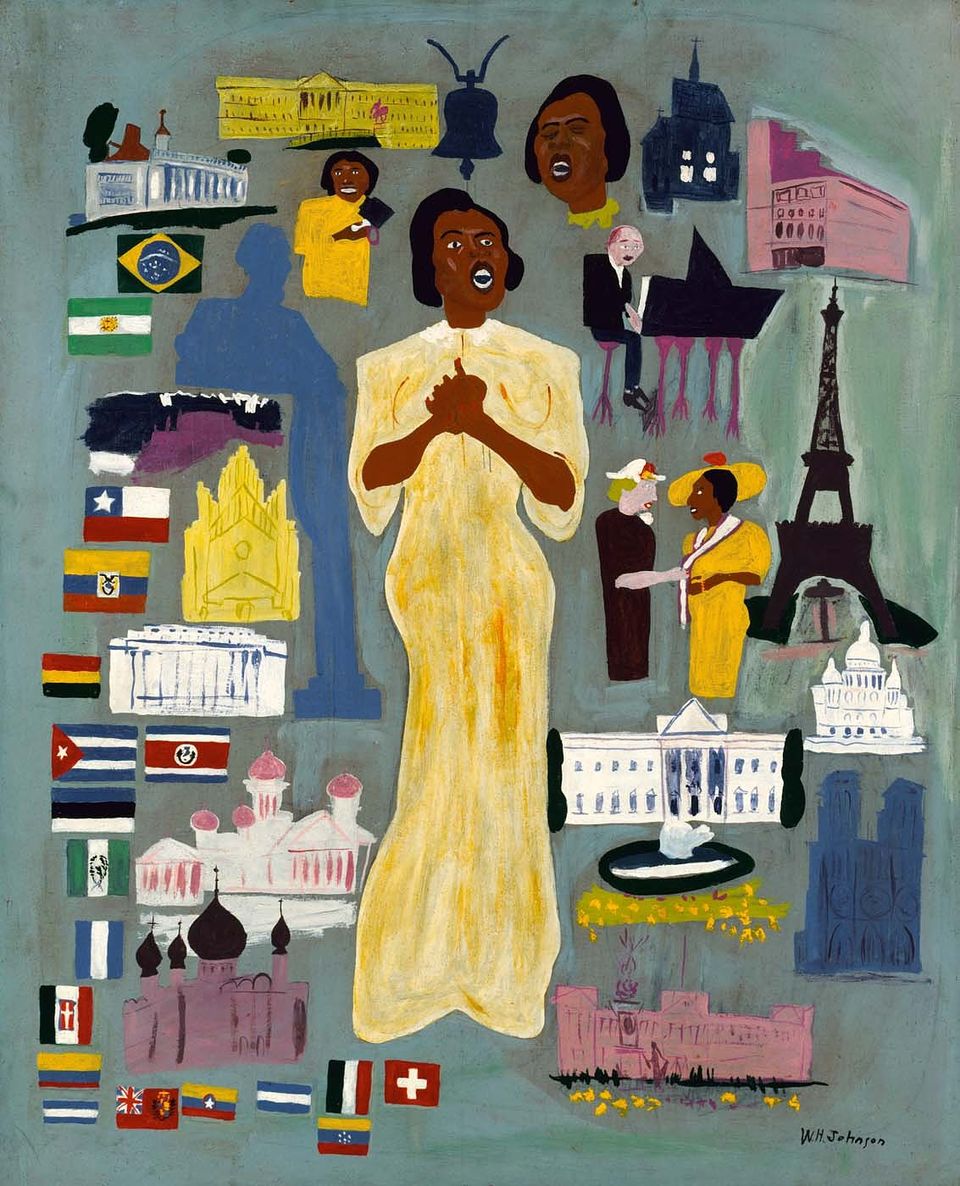
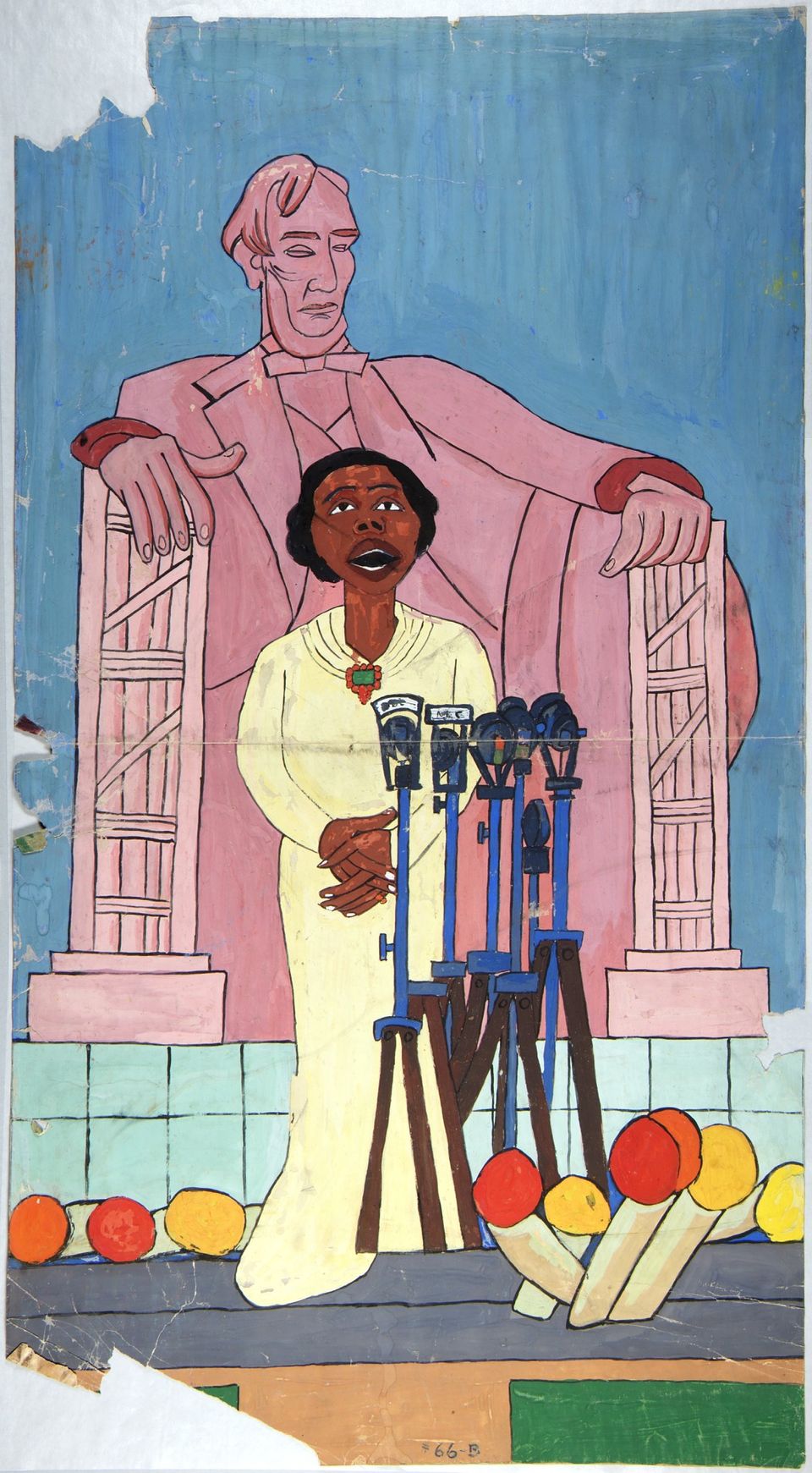
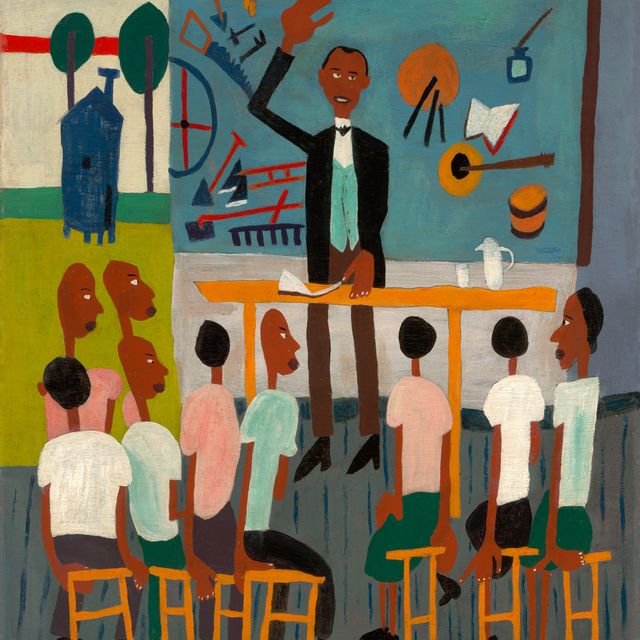
The Smithsonian American Art Museum created "A Journey Through Art with W. H. Johnson" to introduce the artwork of William H. Johnson and explore how his works can be used to teach civil rights issues. Topics, which include The War Effort, Freedom Fighters, and Women Builders, cover such issues as African American soldiers in World War II, historical figures who fought for equality, and women who created educational opportunities for African Americans. Each topic includes unit activities to further explore the subject.
"Let Your Motto Be Resistance: African American Portraits." National Portrait Gallery. Accessed February 15, 2011.
http://www.npg.si.edu/exhibit/motto/.
Resource Type: Online Exhibition
"Let Your Motto Be Resistance: African American Portraits", the inaugural exhibition of the National Museum of African American History and Culture, showcases images from the collection of the National Portrait Gallery. This exhibition website features an image gallery with information about some of the one hundred portraits featured during the 2007--08 show.
"Malcolm X: Make it Plain." PBS. Accessed February 11, 2011.
http://www.pbs.org/wgbh/amex/.malcolmx/.
Resource Type: Website and Film
The American Experience documentary film Malcolm X: Make it Plain tells the story of the complex leader who was many things throughout his life, including a political philosopher and visionary, husband, father, dynamic orator, and militant minister. The film’s website includes essays, photographs, a timeline, and a teacher’s guide.
"Martin Luther King Jr. National Memorial." National Memorial Project Foundation. Accessed February 11, 2011.
http://www.mlkmemorial.org/.
Resource Type: Website
The website for the Martin Luther King Jr. National Memorial provides information about the memorial in Washington, D.C., educator resources, a virtual tour of the memorial, and information on King.
Menkart, Deborah, Alan D. Murray, and Jenice L. View, eds. Putting the Movement Back into Civil Rights Teaching: A Resource Guide for Classrooms and Communities. Washington, DC: Teaching for Change and the Poverty & Race Research Action Council, 2004.
Resource Type: Book
Putting the Movement Back into Civil Rights Teaching provides lessons and articles for classrooms and communities on how to go beyond a “heroes approach” to the civil rights movement. The book includes interactive and interdisciplinary lessons, readings, writings, photographs, graphics, and interviews, with sections on education, economic justice, citizenship, culture, and reflections on teaching about the civil rights movement. The book can be ordered from Amazon.com.
"Mighty Times: The Legacy of Rosa Parks." VHS. Montgomery, AL: Hudson & Houston, Teaching Tolerance, Southern Poverty Law Center, 2002.
Resource Type: Film and Viewer’s Guide
This teaching kit includes a forty-minute documentary film in VHS format with closed captioning and a viewer's guide with classroom activities and historical documents that bring the Montgomery Bus Boycott alive for today's students. Produced by Teaching Tolerance and Tell the Truth Pictures, Mighty Times was broadcast nationally by HBO. Available under at www.teachingtolerance.org.
"The Murder of Emmett Till: The Brutal Killing that Mobilized the Civil Rights Movement." PBS. Accessed
February 11, 2011.
http://www.pbs.org/wgbh/amex/till/index.html.
Resource Type: Website and Film
The American Experience documentary film The Murder of Emmett Till: The Brutal Killing that Mobilized the Civil Rights Movement tells the story of the 1955 murder of fourteen-year-old Emmett Till, whose death galvanized the civil rights movement. The film’s website includes a timeline, additional information on the people and events, and a teacher's guide.
"National Civil Rights Museum." Accessed February 11, 2011.
http://www.civilrightsmuseum.org.
Resource Type: Website
The National Civil Rights Museum---located at the Lorraine Motel in Memphis, Tennessee, the site of Dr. Martin Luther King Jr.’s assassination---uses its collections, exhibitions, and educational programs to chronicles key episodes of the American civil rights movement and the legacy of this movement to inspire participation in civil and human rights efforts globally. Educator resources are available on the website.
"NCSS Teachers' Library." National Council for the Social Studies. Accessed February 11, 2011.
http://www.socialstudies.org/teacherslibrary.
Resource Type: Website Resources
The National Council for the Social Studies (NCSS) has a collection of classroom activities, teaching ideas, and articles that can be searched by historical period or grade level.
"Rosa Parks Museum." Accessed February 11, 2011.
http://montgomery.troy.edu/rosaparks/museum.
Resource Type: Website
The Rosa Parks Museum is located at Troy University in Montgomery, Alabama. Its purpose is to "uphold and interpret for the public benefit, education and enjoyment, materials related to the events and accomplishments of individuals associated with [the] Montgomery Bus Boycott." The museum’s website includes information on the life of Rosa Parks and the Montgomery Bus Boycott.
"Separate is Not Equal: Brown v. Board of Education." Smithsonian National Museum of American History. Accessed February 10, 2011.
http://americanhistory.si.edu/brown.
Resource Type: Online Exhibition
The Behring Center at the Smithsonian National Museum of American History presented the exhibition "Separate Is Not Equal: Brown v. Board of Education in 2004" to commemorate the fiftieth anniversary of the Supreme Court’s landmark decision that stripped away constitutional sanctions for segregation by race. Information about the exhibition and other resources relating to Brown v. Board of Education, including an annotated bibliography, timeline, and teacher’s guide, are found on the exhibition’s website. The exhibition is no longer on view at the museum.
"Smithsonian Folkways." Accessed February 15, 2011.
http://www.folkways.si.edu.
Resource Type: Music
Smithsonian Folkways Recordings is the nonprofit record label of the Smithsonian Institution, dedicated to supporting cultural diversity and increased understanding among peoples through the documentation, preservation, and dissemination of sound. You can use the website to find recordings, listen to podcasts, watch videos, and access Tools for Teaching, such as lessons and activities. Numerous recordings such as Freedom Songs, Lift Every Voice and Sing, Wade in the Water: African American Sacred Music Traditions, and an excerpt from King’s "I Have a Dream" speech are available on this site.
"Students 'Sit' for Civil Rights." Smithsonian National Museum of American History. Accessed February 15, 2011.
http://americanhistory.si.edu/ourstory/activities/freedom/.
Resource Type: Website
The Smithsonian History Explorer website, a project of the Kenneth E. Behring Center at the Smithsonian National Museum of American History, produced this feature on an object in the museum's collection—a section of the lunch counter from the F. W. Woolworth's store in Greensboro, North Carolina, where the historic sit-ins of 1960 took place. This site provides free books, lessons, activities, songs, and more related to the Greensboro sit-ins.
"Teaching Tolerance." The Southern Poverty Law Center. Accessed February 11, 2011.
http://www.tolerance.org/.
Resource Type: Website
Founded in 1991, Teaching Tolerance is a project of the Southern Poverty Law Center, a nonprofit civil rights organization. The project is dedicated to reducing prejudice, improving intergroup relations, and supporting equitable school experiences for our nation's children. The website provides free classroom activities, teaching kits, recommended resources, and the bi-annual Teaching Tolerance magazine.
"Teaching With Documents: The Civil Rights Act of 1964 and the Equal Employment Opportunity Commission." National Archives and Records Administration. Accessed February 14, 2011.
http://www.archives.gov/education/lessons/civil-rights-act/
Resource Type: Lesson Plan and Resources
The National Archives of the United States provides resources for teaching with primary documents. This lesson focuses on the Civil Rights Act of 1964. The lesson includes reproducible copies of primary documents from the holdings of the National Archives, teaching activities correlated to the National History Standards and National Standards for Civics and Government, and cross-curricular connections. Teaching materials on other topics are also available.
"We Shall Overcome: Historic Places of the Civil Rights Movement." National Park Service. Accessed
February 14, 2011.
http://www.cr.nps.gov/nr/travel/civilrights/.
Resource Type: Website
This website highlights forty-nine places listed in the National Register for their association with the modern civil rights movement, as well as the Selma-to-Montgomery March route—a Department of Transportation All-American Road. Maps, site information, and resources are also available on the website.
"'With an Even Hand': Brown v. Board at Fifty." Library of Congress. Accessed February 14, 2011.
http://www.loc.gov/exhibits/brown/.
Resource Type: Online Exhibition
The exhibition "'With an Even Hand': Brown v. Board at Fifty" presents more than eighty photos, letters, newspapers, manuscripts, maps, songs, and films related to the Supreme Court's 1954 decision that "separate educational facilities are inherently unequal." The online exhibition is organized in three parts: previous court cases that laid the ground work for the decision, the argument underpinning the ruling and the public's initial response, and the aftermath of the decision.